
Learning to fly, one mistake at a time
Flying is simple isn't it? Take off. Land. Repeat. And obviously try not to get the two confused.
I started learning to fly in my early 50s and have never quite stopped being a student. This is my attempt at explaining why I fly. To myself, to Wifey, to my neighbours, to my followrs, detractors and hopefully to you.
I hope you find my antics honest, humorous and possibly even inspiring? That last one is a bit of a stretch, I know. But I love flying, and I love seeing others understand why I fly. If that encourages one person into the air, then I've succeeded.
My goal is simple: keep the number of landings equal to the number of takeoffs. And of course, try not to crash. I'm not an instructor - listen to them not some internet influencer (I was once called an 'up and coming YouTuber - Thanks Flyer Magazine'!!), All you will find here is just me and my experiences. Hopefully you can learn from them before I run out of luck, skill or cash.
This started as a simple this is what I did today diary, but has mutated into more of a discorse on GA flying in the UK, and sometimes the rest of the world. as a GA pilot we have a responsibility to keep up with the goings on in avaition, and being an ex journalist I still have a interest in news reporting, so from time to time you might get something pop up I have noticed. The ideas and text are mine, and yes some of the cartoons are AI, I can take photographs but my cartoon skills are non existant.
I hope it helps, I hope you enjoy my small spot on the internet, and if there is anything you would like to see, just drop me an email.

Bored on a weekday evening? You could do worse than tea, biscuits, and a CAA-partnered safety webinar. This one, run by Astral Aviation Consulting, was called Power Off, Brain On, and it's a title I'm stealing. The engine stopping, or stumbling, or just not sounding right, isn't the dangerous bit. What happens in the pilots head in the next thirty seconds is.
It seems the statistics say that complete engine failure is actually rare. What's more common is rough running, partial power loss, a hesitation that clears before you've finished being alarmed by it. 69% of the room had experienced rough running. Only a handful had had an engine actually die.
"Engine failures rarely kill pilots. Loss of control, delayed decisions and poor preparation do."
I want to get something out of the way first. You might read this and think, well, he's clearly been kicked out of a group and he's having a moan about it. You are sort of right, it was the trigger for this post, but I've seen this happen more than once, in more than one place, and I've got my own bit of platform to shout about it on. So here we are. All three of you reading this, thank you for your time.
Read more: Facebook Group GateKeeping and AI clickbait dross.

I like things that go beep. Any gadget that screams like a demented beetle when it finds something interesting was always going to end up in my bag, and that is honestly the whole reason I own a Radiacode 101. The problem with owning a radiation detector is that you run out of things to point it at rather quickly. There are only so many times you can test a smoke detector, particularly as modern ones generally don't contain a radioactive source anymore. So it came with me on a commercial flight, and sat on a tray table at 35,000 feet reading twenty times what my kitchen does.
Read more: I Took a Radiation Detector on a Plane. Here's What It Actually Read
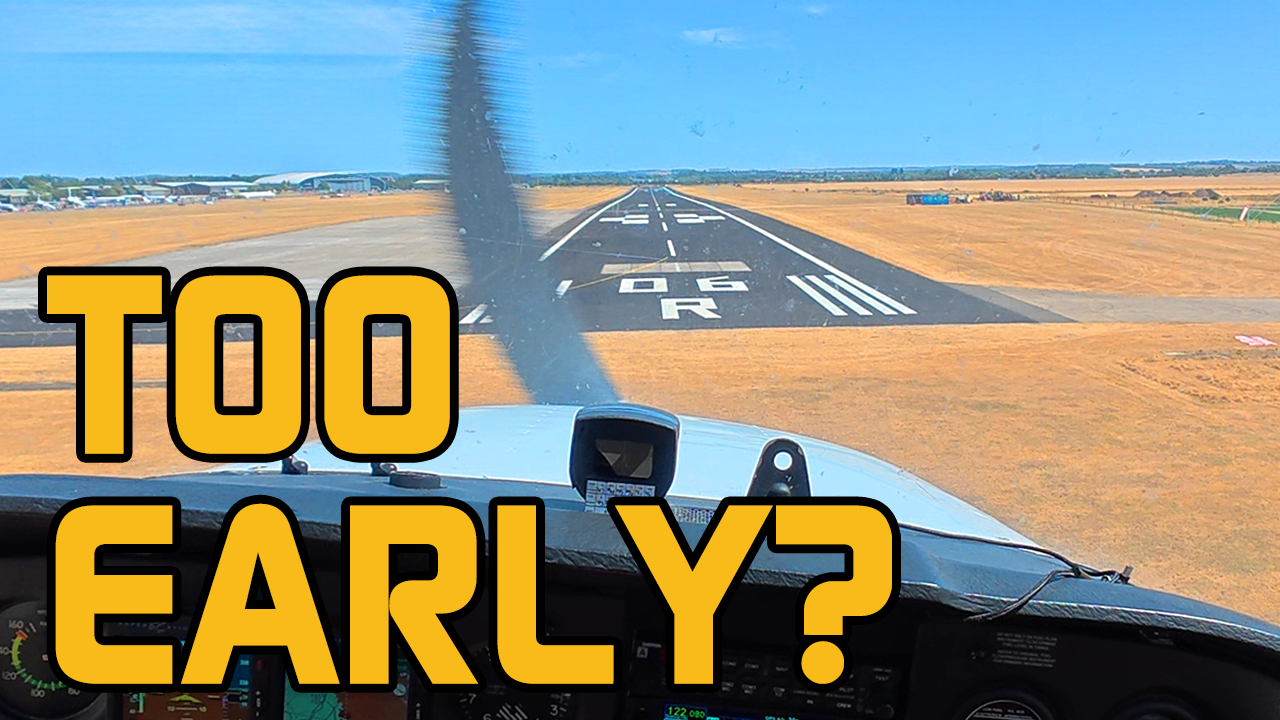
I bounced a landing at Duxford. I admit it was more than once, and to prove it there is video of it, which is the price of pointing cameras at yourself and the posting the results on YouTube.
Here's what I assumed had happened: I got the flare wrong. Ballooned, dropped it in, made a mess of the last twenty feet. That's the usual story with a bounce and it's the one I told myself all the way home.
Then I watched it back several times and gues what? I was wrong.

There's an assumption that anyone with a YouTube channel is quietly making a fortune. I've got another YouTube channel that's actually monetised, been through the Partner Program properly, and it earns me about enough for a GoPro battery a month. Meanwhile the KK costs three figures an hour to fly before I've filmed a thing. YouTube has just doubled the watch hours you need to get monetised in the first place, so this seemed like a good moment to show you some numbers, and to answer something I got accused of a few weeks back.
Read more: What It Actually Costs To Make An Aviation YouTube Video

I had to pump up a tyre on KK recently. She was looking a bit flat. Somewhere around the twenty minute mark of faffing around I realised how much I really hate these spats.

I've flown plenty of times in commercial aircraft, and the flights rarely surprise me. A recent Delta from LAX to Orlando gave me more seatbelt announcements in one trip than I've had in every other flight combined. It wasn't even rough. And then it got me thinking about a habit of mine that a few of you keep pulling me up on.
The CAA has opened a consultation on making electronic conspicuity mandatory. Every aircraft below FL100 would have to transmit its position, and the owner pays for the privilege. KK's transponder can't do it, so I spent a happy hour working out what this was going to cost me.


