
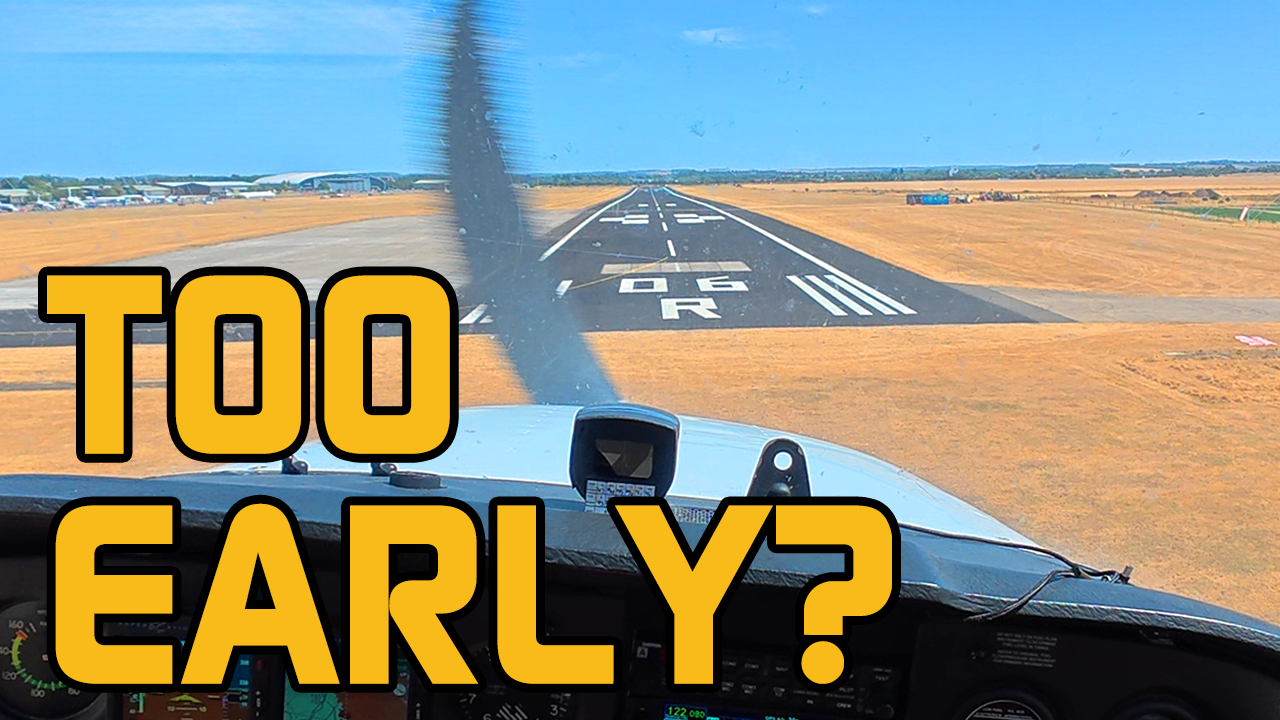
I bounced a landing at Duxford. I admit it was more than once, and to prove it there is video of it, which is the price of pointing cameras at yourself and the posting the results on YouTube.
Here's what I assumed had happened: I got the flare wrong. Ballooned, dropped it in, made a mess of the last twenty feet. That's the usual story with a bounce and it's the one I told myself all the way home.
Then I watched it back several times and gues what? I was wrong.
Three things, not one
The bounce itself came from taking the crosswind correction out too early. Somewhere in the last few seconds I straightened her up as though the wind had politely stopped for me, the right wing caught lifted, and KK arrived on the left wheel with slightly more enthusiasm than dignity. I admit I should have gone around, which at least saves the comments section the trouble of tellime me that was the case.
But the crosswind only explains the last two seconds. Two other things set it up. It almost soulds like a swiss cheese model.
The first is rust. Not the metal corrosion kind, but rust as in Skills fade. It was a while since I'd flown, and skill fade doesn't announce itself. It just turns up as small imperfections you don't notice. Until they bite.
The second is the runway. Always blame the runway. Duxford's is wide, and I don't fly there often enough for the picture to be automatic. A wide runway sits differently in the windscreen to the one you know, and your eyes read that width as being lower than you actually are. So you arrive at the flare high, believing you're where you should be. Interestingly, a viewer said much the same thing without any prompting from me: he'd done the same recently at Lee-on-Solent, a big unfamiliar runway, and then greased it straight back at his own grass strip an hour later. Same aeroplane, same pilot, same day. Different picture, and yes my later landing at Elstree was much better than this.
Skills fade, plus an unfamiliar sight picture puts me high in the flare. High in the flare gives you longer hanging there than you expected. And the longer you're hanging there, the more chance you'll fidget with something you should have left alone. Like the crosswind correction.
The part I actually got wrong
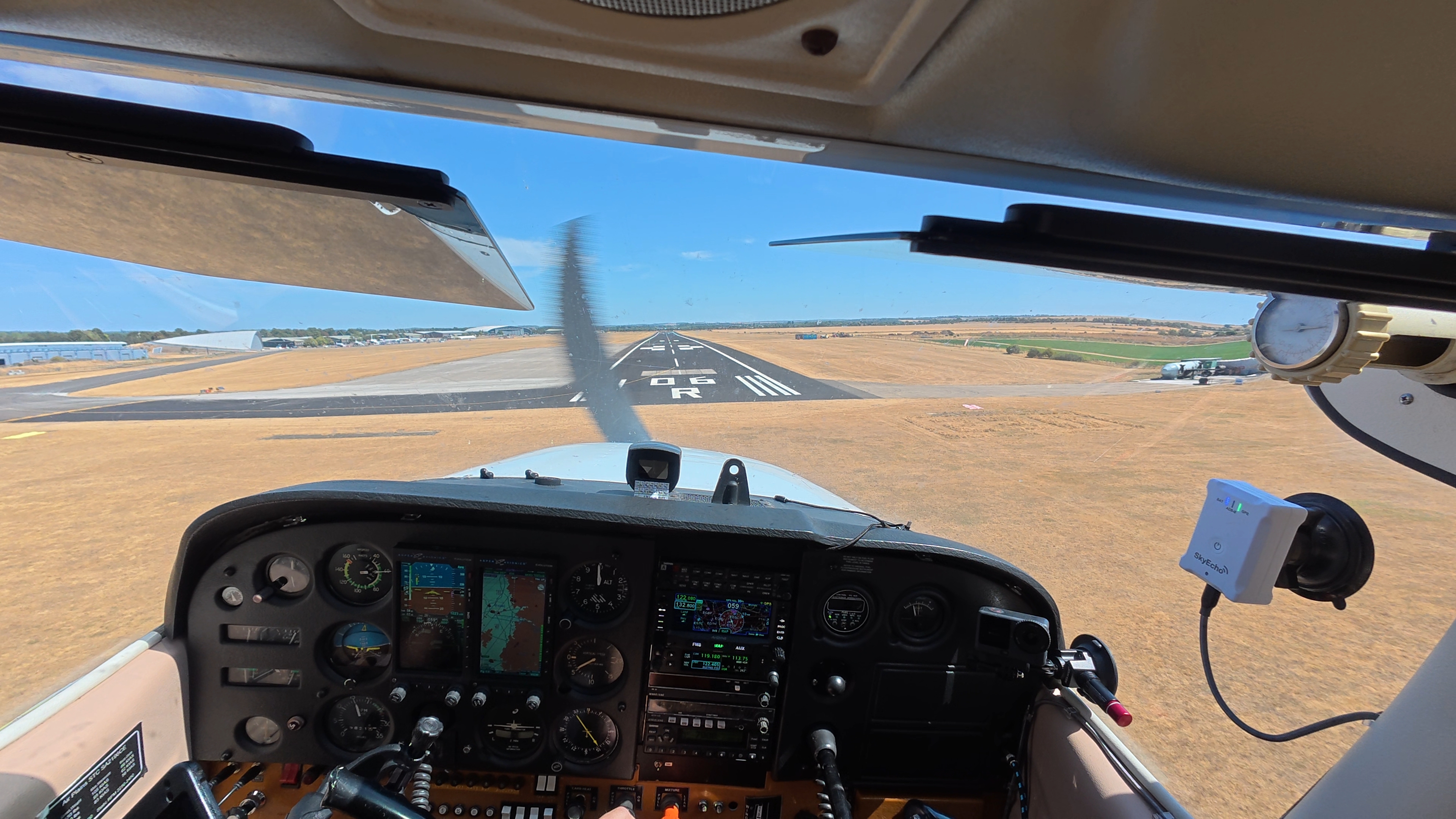 Even that isn't really the beginning. The beginning is about two miles out.
It was a straight-in approach, which I have a long and undistinguished history of making a hash of. Generally circuits I can do. A circuit hands you a shape: downwind, base, final, each leg giving you a job at a sensible moment.. Even Elstree with its turns and twists. A straight-in gives you one long line and asks you to do all the same jobs somewhere along it, in an order of your own choosing, while the picture keeps changing.
And things were busy. Fowlmere ws active off to my left, which puts traffic where you're already looking. Both Duxford circuits were operating. An aircraft departing the very runway I was about to land on, And Duxford asking me to report at two miles, which meant working out where two miles was, because nothing on the chart tells you.
None of that is dangerous on its own. Any one of those things is a normal day's flying, but stack them and something is going to give.
Looking at the video I can see the tell tales, I started to I re run checks I'd already completed. Not because I thought I'd missed them, but because I couldn't remember doing them, and there wasn't a spare corner of my brain left to remember.
What was left over got the landing. And a landing onto an unfamiliar wide runway after some time away lay-off is precisely the landing that needed more than the leftovers.
The bit nobody expected to be interesting
There's a detail in the video that's generated more discussion, which serves me right for worrying about the bounce.
I mentioned not having a landing 'clearance'. Someone then quite correctly pointed out that Duxford is Air/Ground or FISO, so they can't issue one. They're right. But until I hear "land at your discretion", I'm not putting KK down on a runway that might have several million pounds of Spitfire, Harvard and assorted warbirds on it. They have guns, even if they are deactivated.
Which does complicate the go-around question, now I think about it. Some of what was filling my head on that approach wasn't workload in the technical sense. It was Duxford being Duxford.
So should I have gone around?
I've gone back and forth eith this one. Even more so that my commentators. The argument for is that I said it myself, mid-bounce, which is usually a strong hint. The argument against is that I had the runway, the speed and the room, I let KK settle, and I landed it safely. A few people have said they've seen far worse landings held onto without a second thought, which is reassuring but isn't quite the same as being right.
I've left the question open in the video deliberately. I'd rather hear what you'd have done than pretend I've settled it.
What actually changes
The fix isn't in the flare. Everyone who commented had technique ideas for me, and the technique advice was the same I always get - hold the nose up longer, fly it to the aiming point, watch the speed above all else. but I tihnk it was simpler. I was rusty.
So what did I learn? Before the next straight-in, I'm marking the chart. Two miles and four miles, planned on before I ever start the engine, so that when the radio asks where I am I'm reading rather than calculating. One job off the pile, at exactly the point in the approach where the pile is at its worst. I'll also switch the stick thing to distance on Sky Demon.
And on an unfamiliar wide runway, I'll assume the picture's lying to me until proven otherwise.
Maybe the bounce was never really about the flare. It was about how full my head was two miles out - everything after that was just numbers. the ones I was aiming for.


