
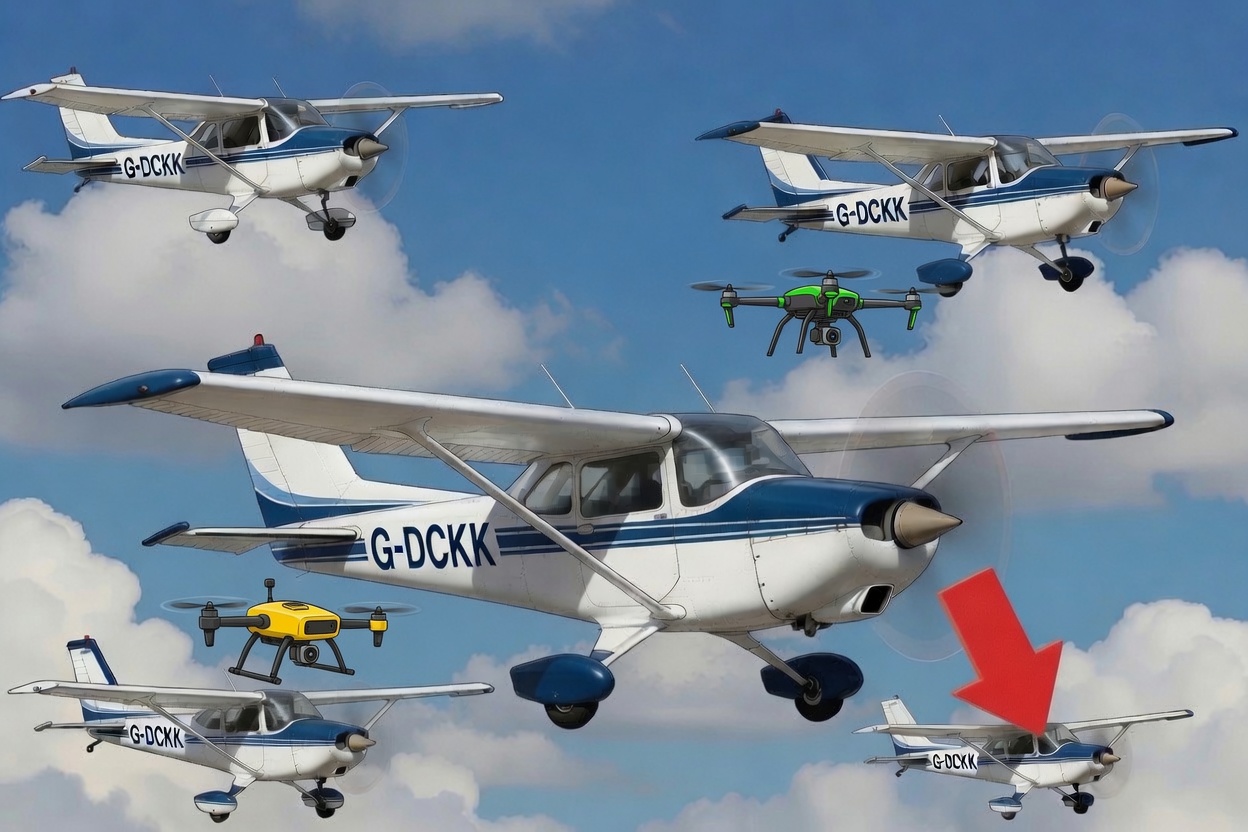
The CAA has opened a consultation on making electronic conspicuity mandatory. Every aircraft below FL100 would have to transmit its position, and the owner pays for the privilege. KK's transponder can't do it, so I spent a happy hour working out what this was going to cost me.
The proposal is simple enough. Fly below FL100 in UK airspace and you must transmit your position with ADS-B. Under 140 knots you need a 1090MHz ADS-B device with SIL and SDA of at least 1. Above that, certified kit and proper money, so the RV crowd are going to have a busy week.
It is all down to your SILs and SDAs
Every ADS-B transmission carries two quality flags. SIL, Source Integrity Level, asks whether your position is really where you say it is. That's the GPS. Your phone might be a hundred metres out and still look perfectly confident about it. A proper aviation GPS knows when it's having a bad day and admits it.
SDA, System Design Assurance, asks whether the box around that GPS was built to a recognised aviation standard, or whether it's a clever gadget.
Both have a value between 0 to 3. Certified traffic systems, the TCAS in an airliner, throw away anything below 1. Not grey it out. Bin it. So squawk SDA 0 and you're transmitting away happily, visible to your mate on SkyDemon, invisible to the thing that would properly ruin your afternoon.
Will my SkyEcho do?
Yes, and it has done for five years, which came as news to me.
I spent most of a day convinced the answer was no, because SDA 0 keeps turning up next to the SkyEcho wherever you look. Then I opened the manual. Revision L, March 2021, issued straight after the CAA amended CAP1391. SDA 1 by default. There's a table at the back listing capability by region, and under United Kingdom it says, plain as day, transmitted SIL 1, transmitted SDA 1.
So if you've got one, you're compliant. Do check your own unit though, because SDA is a field on the setup page rather than something fixed at the factory. Default is 1, but an old box that never took the update could still be sitting at 0, quietly invisible to everything that matters. Worth five minutes and a cup of tea.
So is it just a tick boxing exercise?
On the day this becomes law, nothing changes in KK. Same box, same suction cup, same window, same settings. I'll be legal. I'll have paid nothing for the privilege.
But will I be any more visible than I was last Tuesday?
Not really. The Sky Echo is still transmitting from inside a metal aeroplane, and uAvionix themselves say the performance is affected by antenna placement and subject to airframe shadowing. Their words, not mine. The CAA know it too. The whole reason they're planning a ground network is to compensate for the known weaknesses of the devices they're about to make everyone carry.
And nobody is obliged to look as ADS-B In stays optional. It is not a requirement.
So I comply but I'm still half invisible. in my opion that isn't a safety improvement. That's a box being ticked.
Which is what worries me
A tick box is worse than nothing, and here's why.
Once we're all compliant, the problem is officially solved. The paperwork says the sky is legible. Everyone has a device, everyone is transmitting, everyone passed. And when something eventually goes wrong at 2,000 feet over Hertfordshire, the file will show that the 172 was equipped, switched on and fully in line with the mandate.
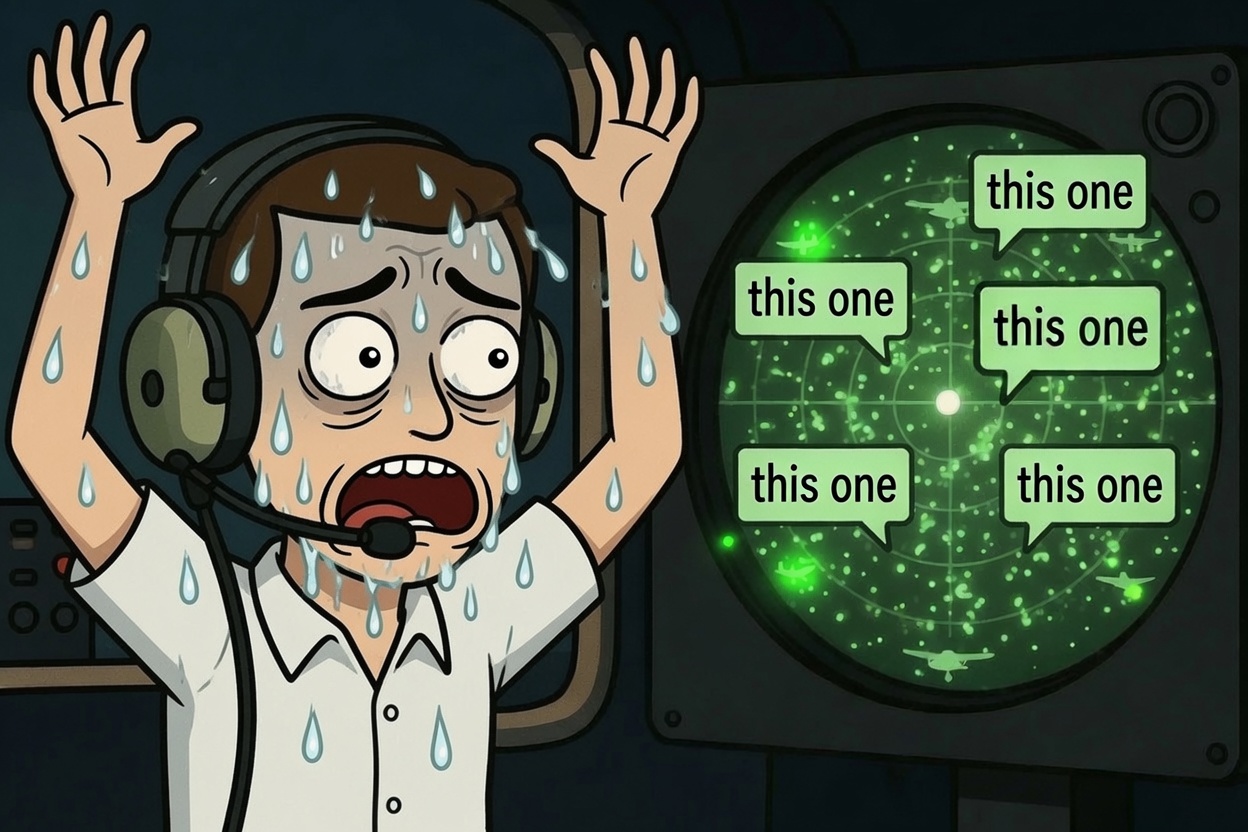 So who is this actually for?
Follow the architecture, not the press release. Beyond-visual-line-of-sight drones must be equipped to detect ADS-B. Hard requirement. Manned aircraft need detect nothing at all. The whole programme sits under Airspace Modernisation and Future of Flight, and those are not documents about Cessnas.
At some point a drone will hit an aeroplane, and somebody will have to pay. Fitting shiny kit to a drone is easy, because a drone isn't carrying a fragile bag of water with a family waiting at the fence. The rules for the machine are always easier than the rules for the man. But a forty-year-old 172, transmitting through a plastic box stuck to a window, with a signal the manufacturer admits is degraded by the airframe? Much easier to blame.
Cynical, possibly. But as they say "where there's blame, there's a claim!"
And yet I'd still tick yes
Here's the argument I keep having with myself, usually somewhere over Hertfordshire.
My ipad display misses aircraft. Regularly. And I can never tell you why. Empty sky? Somebody there and not transmitting? Somebody there, transmitting, and my box didn't hear it? who knows?
That's the real problem. Not coverage. The screen means nothing, and a screen that means nothing might be worse than no screen at all, because you look at it anyway. if you are looking at a screen, you are not looking out. Is 1/2. the data worth more or less than nothing? which half is the accident waiting to happen in?
Then there's the bill
The CAA admits the cheap devices have limits, so the plan is a ground network to fill the gaps. Two questions. Who pays, and when does it turn up? Name one government infrastructure programme that came in on time and on budget. Go on, I'll wait. HS2 was a railway to Birmingham.
User Pays
We are drifting steadily towards a user-pays regulator. So the CAA mandates a device, the affordable device has known limits, the CAA builds a network to compensate for the limits of the device it made you buy, and then somebody has to pay for the network. I can. guess who. It is the TV licence for the air.
You buy the box. Then you buy the fix for the box. and then the subscriotion to use it.
And no, they're not tracking you. I am.
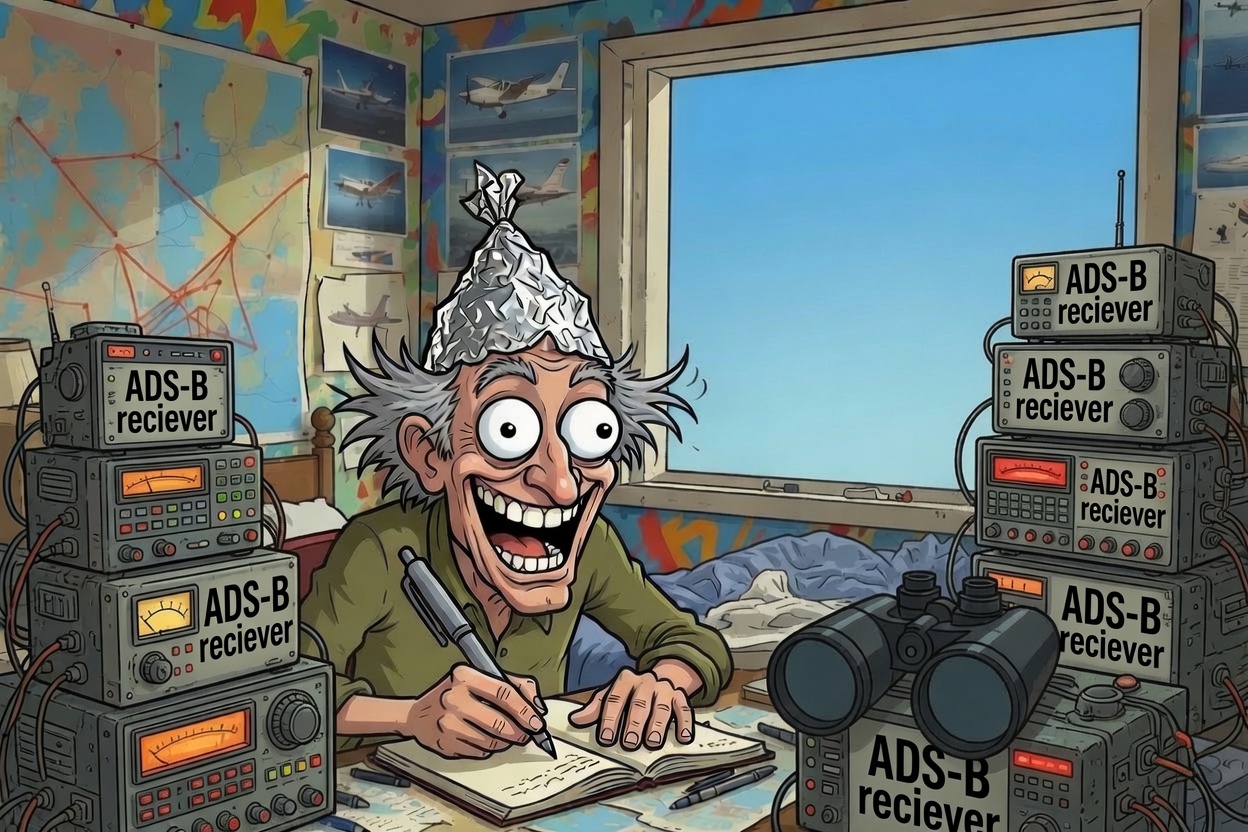 I have a confession, since a certain sort of pilot is getting very worked up about this online.
I run two ADS-B receivers. They feed ADS-B Exchange. So I am, in a small and extremely nerdy way, part of the tracking apparatus people claim to be frightened of. Nobody pays me. I did it because it was interesting and I had a spare Raspberry Pi doing nothing.
I know who else uses that data. The chap who logs every aircraft over his roof and writes to his MP, having bought a house under a flightpath that was there long before he was. And the chemtrail crowd, who look at an easyJet at FL350 and see a conspiracy in a contrail. I'm a pilot. I didn't move in next to a runway and then complain about people flying to La Palma.
But that's every technology ever built. A handful of people use it to be strange on the internet. The rest of us use it for something useful. I use it to see what's around me. Spotters use it. Researchers use it. It works, and it works precisely because it's open.
So yes, ADS-B is an unencrypted broadcast. Mandate it and every flight becomes a public record. That's the design, not a flaw, and I'd rather say it plainly than pretend otherwise. But the record is already public. You're squawking Mode S right now, and have been for years. Anyone with a browser can watch me fly to Duxford for a bacon roll and come home the long way.
The state doesn't need a mandate to find us. It just needs a laptop.
What actually bothers me about the Big Brother lot is this. You get thirteen questions and one consultation. Fill it with surveillance panic and you've handed the CAA the easiest afternoon of their week. They'll bin it, they'll be right to, and every serious objection that arrived in the same envelope goes in the bin alongside it.
The serious ones are these. Nobody has to look at you. The devices are weak and the manufacturer says so. The ground network has no budget and no date. And the whole thing makes us legal without making us visible.
Those are the ones that could kill you. Write about those.
Point landed?
I support it. As a pilot anything that genuinely improves safety gets my vote.
I transmit ADS-B so that there is a hope some other aircraft wil not spoil my afternoon and crash into me. But the problem is nobody has to make anything visible to me. The infrastructure meant to make it work properly has no budget and no date and will probably land on my bill anyway.
I'd rather be honestly invisible than officially visible. At least then I'd still be looking out of the window.
Have your say
The consultation closes at midnight on 22 September 2026. Thirteen questions, twenty minutes, open to anyone. They want cost evidence and say they're particularly interested in older, lower-value aircraft.
A fifth of a 1977 Cessna on a pad at Elstree. That's the aircraft they're asking about.
The consultation is at consultations.caa.co.uk, and the document is CAP3268.


