
I bought a carbon monoxide detector for the aircraft, got it out to KK, got the cables sorted, and then discovered it needed a nine volt battery I didn't have. So this isn't a review. It's a first look at a device that has never once switched on in my hands, and an honest account of what I can and can't tell you about it yet.
Carbon monoxide is the one that gets you quietly. A colourless, odourless gas, it is a by-product of incomplete combustion, and sitting a few feet in front of every piston pilot in the country. No doubt you have seen the coloured dots in trainer aicraft that are supposed to change colour in the presents of CO, but they are now out by CAA mandate. If you intend to carry passengers who are not qualified pilots, then you are REQUIRED to carry an active CO detector. We have had a domestic active CO detector rattling around KK's cockpit for years to warn us about carbon monoxide, but it's a domestic unit. It beeps. Politely in the back of a pocket, assuming of course we remember to check the batteries are not flat. Under an ANR headset at cruise power, I'm not convinced I'd hear it.
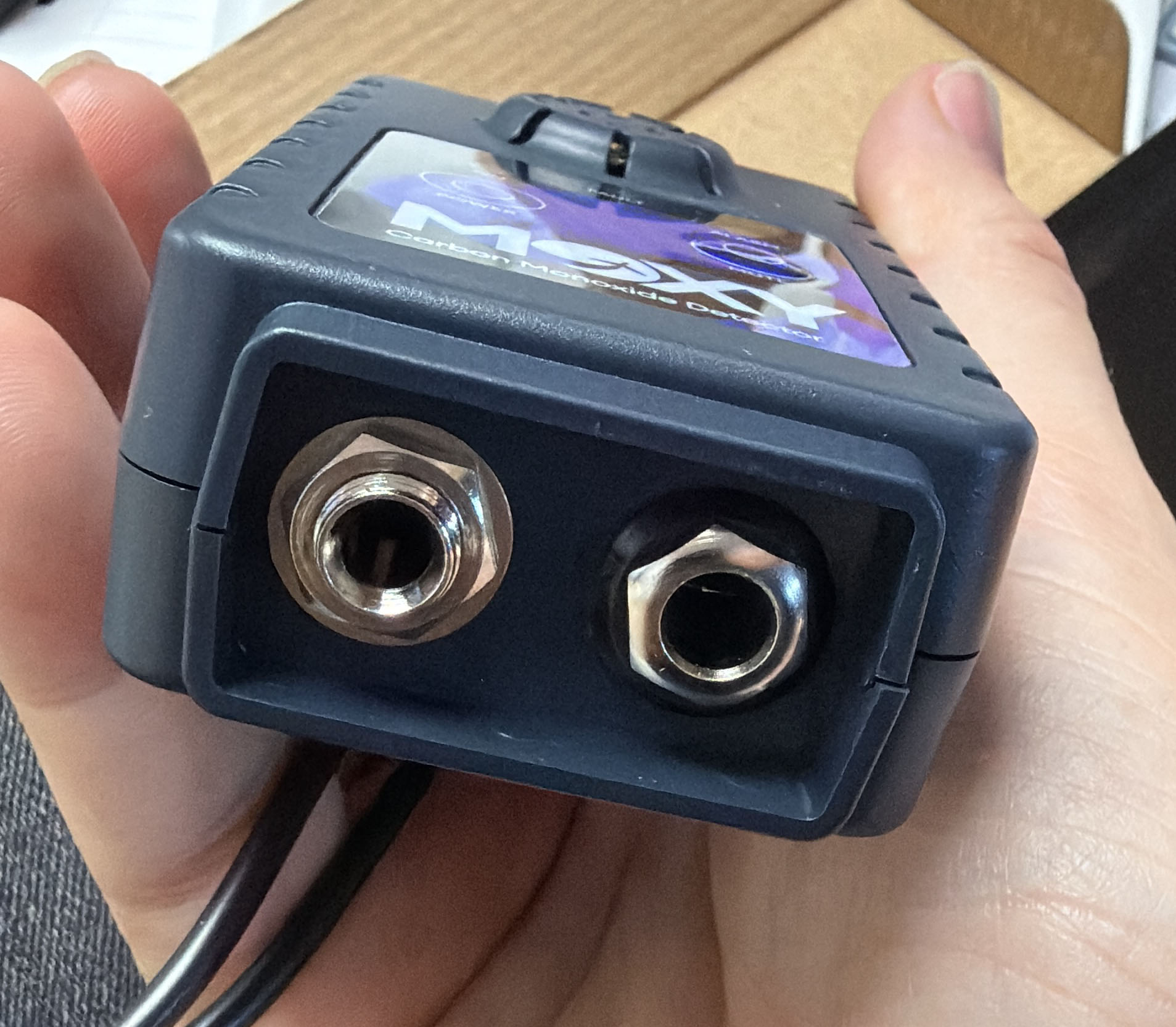 That's the problem the Moxy is built to solve. It is designed to run inline between your headset lead and the aircraft's audio panel, so a warning arrives in your ears rather than somewhere in the footwell. Whether it does that well, I can't tell you.
What's in the box
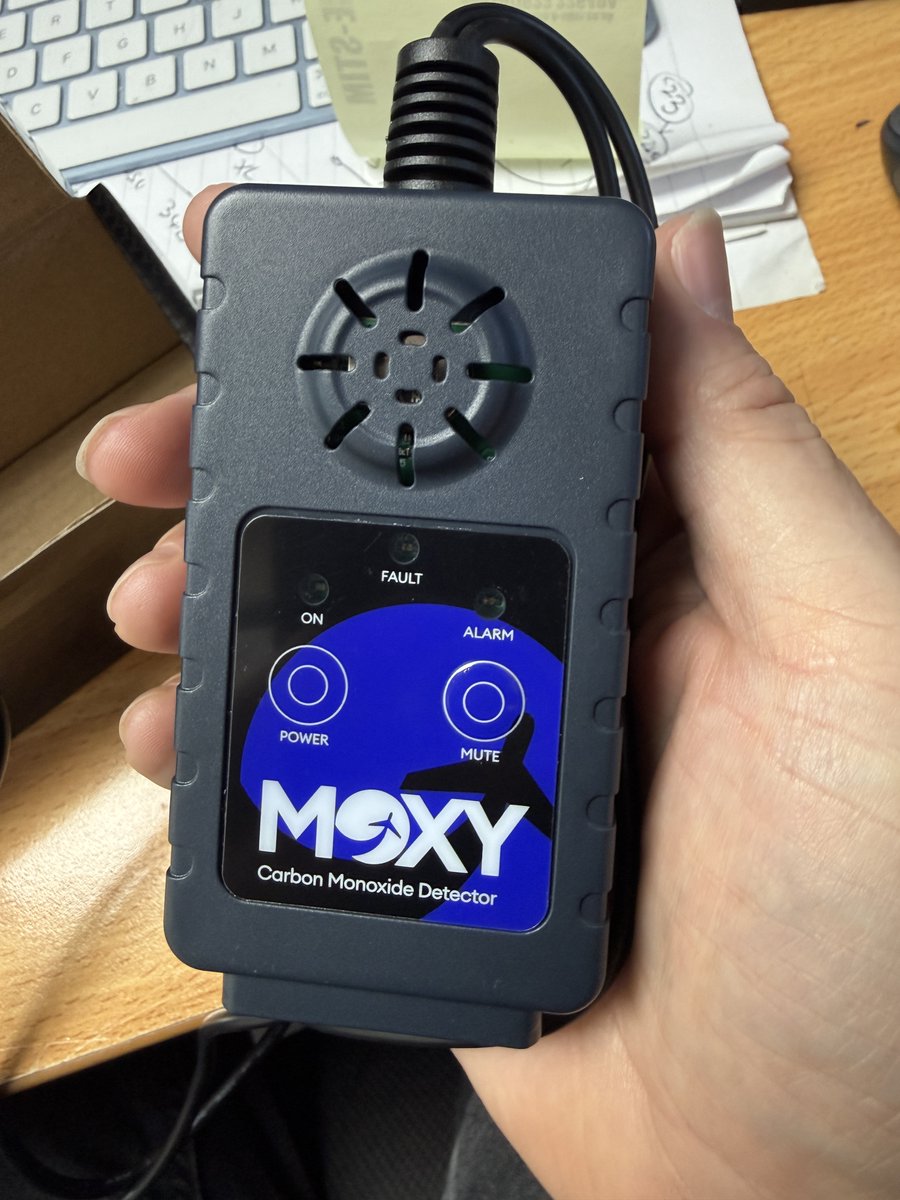
A small cardboard box, and not much in it. The instructions are thin. The unit itself is better than the packaging suggests: a moulded case that feels genuinely durable rather than cost-engineered, with clear, well-marked buttons. It doesn't feel like something that'll rattle apart in a flight bag.Two things I'm not sold on yet, and I'm deliberately not calling them faults until I've flown with them.
The first is where the inline connection sits. My headset already has an ANR controller hanging off it. Add the Moxy and its leads into that same run and you've got another box and more cable in a cockpit that didn't need either. Cable management in a Cessna is already an unloved art form. I want to see how it sits in the air before I decide whether it's a real annoyance or just something that looks untidy on the ground.
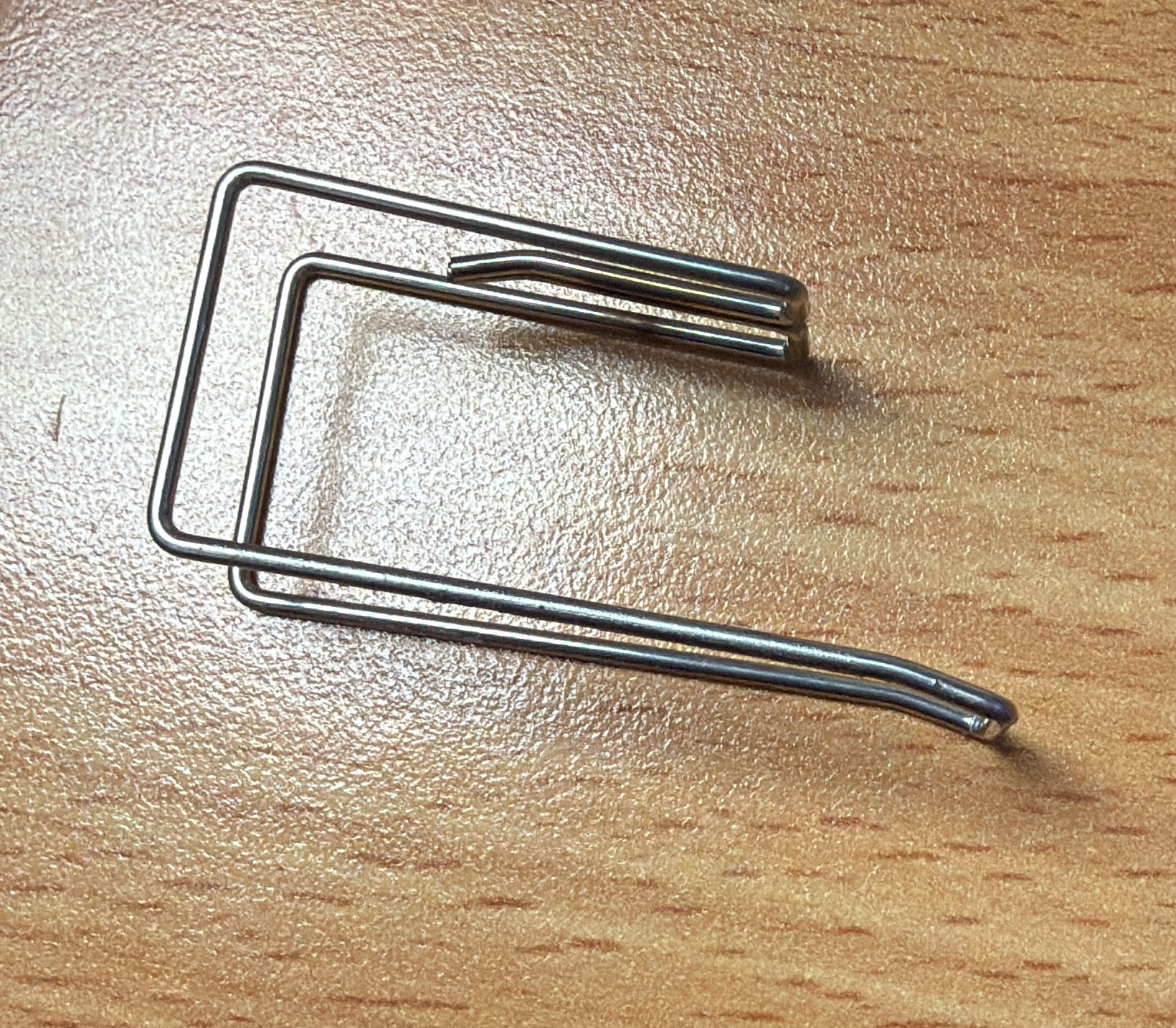 The second is the metal clip it ships with. It looks flimsy. It might not be. Clips that look flimsy sometimes turn out to be exactly stiff enough, and I've been wrong about this sort of thing before.
What the numbers actually mean
Carbon monoxide harm is a product of two things: how much, and how long. Neither on its own tells you much.
Above 35 ppm is generally treated as unsafe for continuous eight-hour exposure. At 200 ppm you're looking at headache, tiredness, dizziness and nausea within two to three hours. Push on to 800 ppm and it's convulsions inside three quarters of an hour, with collapse following within a couple.
Those are ground-level occupational figures, worked out for people standing about in workshops. In some ways we're better off up there. A cabin with the vents open moves a lot more air than a garage or workshop, but does that mitigate the risk?
But that's not really the problem with CO. The problem is that you don't notice it. There's no smell, no colour, no warning. What you get instead is a headache, and feeling a bit thick, and taking slightly longer over decisions than you should. On a warm afternoon in the third hour of a flight, every one of those symptoms has an innocent explanation. You're tired. You're dehydrated. It's hot in here.
And the first thing to go is your judgement, which is the very faculty you'd need to work out what's happening. So you don't catch it. You just get quietly worse at flying the aeroplane. It's a downward spiral, and hopefully never the literal kind.
That's why the thresholds on this thing matter more than the top of its sensing range. And it's why a warning you can hear beats a light you have to look at.
Where it's made, and what's inside it
It's made in New Zealand. Not China, which is unusual enough in this market to be worth saying, and not somewhere you'd guess either.
The price is £149.99 including VAT from Pooleys, or £124.99 before. That's the number that makes people wince, so it's worth pulling apart.
 Avaition Pricing explained
I spent about thirty years in electronics before any of this, which means when I see a price for anything electronic I can't help working out what's behind it. So I went looking for the magical sensor. An electrochemical CO sensor of this type runs somewhere around £25 on its own. Then you need to add a case, a pcb, the audio chips, basic certification, packaging, distribution, wages and that dirty word - profit. Then remember it's being built in New Zealand, a country of five million people at the far end of every supply chain on earth, for a market of light aircraft pilots. Nobody is getting rich on volume here. Once you know that, £150 stops looking like a premium for a badge and starts looking like a fair price for a small-run product built properly. You can still decide it's more than you want to spend. That's a different argument from it being overpriced.
The quoted figures stack up too. Around 200 hours from a battery, a sensor life of ten years, an operating range of minus 20 to plus 60 degrees, and a sensor range of 0 to 5000 ppm. Worth noting the website quotes multi-stage detection from 30 to 300 plus ppm, which is a different thing again. My reading is that 0 to 5000 is what the sensor can physically see, and 30 to 300 plus is where the alarms actually live. Those are the ones that matter, and the manual sets them out clearly.
Alarm one runs from 50 to 99 ppm sustained for five minutes, and the voice tells you to turn off the heating and open a window. Alarm two covers 100 to 299 ppm, same message, but it only waits three minutes. Alarm three is 300 ppm or more for a single minute, and the voice says one word. Divert.
The higher the number, the less time it gives you. And you can mute the first two but not the third, which is exactly right. Nobody should be able to silence the divert.
One more thought on that 200 hour battery. That's 200 hours of the thing being switched on, not 200 hours of sitting in a bag. I fly nowhere near 200 hours a year and neither do most people reading this. So realistically that's several seasons out of one nine volt cell. Which makes the fact that it doesn't ship with one even more annoying, if I'm honest. The one battery you'll buy in five years, and it isn't in the box.
Batteries NOT included
It needs a nine volt battery and guess what? It doesn't come with one. And the battery compartment needs a screwdriver to get into it.
There's a very specific kind of disappointment that comes with "batteries not included," and if you're old enough, you know exactly what it felt like on a christmas morning. The mega present, ripping the wrapping off, diving into the box, and then nothing happens. The whole day hanging on whether anyone in the house had the foresight to buy a pack of AAs. Or C cells. Or, if you were really unlucky, the enormous and eye-wateringly expensive D cells that nobody ever had spare and every shop was shut for buying. Christmas Day ruined!
Then the TV game console turned up and ruined the whole business. Plugged into the wall. Worked immediately. No tantrum required unless dad hogged the controller.
So you'd think I'd have learned. Fifty-odd years of conditioning, and I still stood next to an aeroplane holding a device I couldn't switch on because the battery wasn't included. and I didn't check.
Disclosure
I bought this with my own money. It wasn't sent to me for review, and nobody has seen this piece before publication. Interesting enough the Moxy was designed by the person who ran my PPL ground school, but I didnt know that until after I bought it. No affiliate links to purchase things, as I like to be open and honest - I'm not big enough be be given freebies - but if anyone is offering :-)
Updated 13/8/26
I have been contacted by the creator, with an offer of an uprated clip, and I have discovered this is NOT the same as the domestic detector we commonly leave in the aircraft, this is more designed as a personal carry item, to be brought to the aircraft with your headset - a very interesting idea, but I will post more in the full review.
More to come.
There's no score yet and no verdict, because I haven't earned one. I will update this once the Moxy has flown a few times. Hopefully kit will work as planned. Hopefully I will never find out I need it.


