
Every student pilot hears the same advice on day one. I even give the same advice now. Don't buy anything until you've got your licence or you really NEED it. Borrow, rent, use the school's kit. Wait and see if you actually stick with it.
It's good advice.... and I totally ignored it.
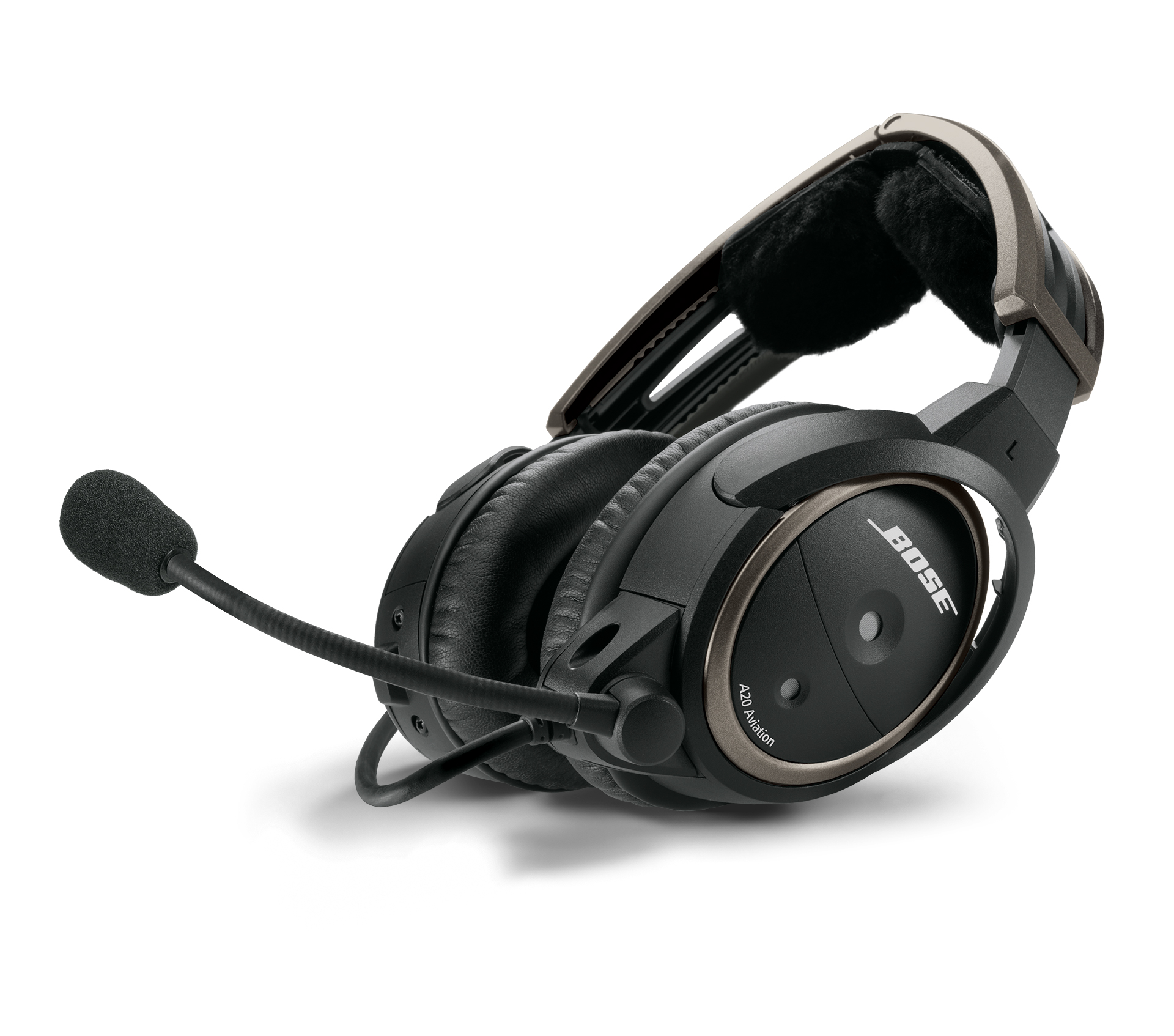
I walked into my second lesson with a brand new Bose A20 in the bag. A thousand pounds of headset, before I'd even worked out which way up to hold the checklist. Reckless? Maybe. Years later, am I glad I did it? Yes. Genuinely yes. And here's why.
The Counterintuitive Case for Splashing Out Early
The "don't buy anything" advice isn't wrong. It's just incomplete.
Here's the thing nobody tells you. You will find your early lessons overwhelming. I did. You're trying to fly an aeroplane, listen to the radio, follow your instructor, run a checklist, read a map, look outside, and not embarrass yourself. Your brain is not just full, it is bursting. There's no spare capacity for "this headset is digging into my ear" or "the mic boom keeps drifting" or "did that just crackle again?"
School headsets generally work. But they're not yours. Different fit every lesson. And you just know the good pair is always out with someone else and you end up with the one that's been sat on at least once.
What you save in money, you can pay for in cockpit stress. For me, having my own headset, sat right, every time, took one variable off the pile. That's not gear envy. That's reducing cognitive load when you're already drowning. And it makes you look more like a pilot. Trust me.
My instructor flew with an older Lightspeed . He was planning to upgrade to Bose the moment he had enough students lined up to pay for it at his hourly rate.
The Bose is not expensive. Well it ia, but It's an investment in comfort. And comfort, when you're flying isn't a luxury. It's a nessessarty.
So yes, expensive. Yes, against the conventional wisdom. But worth it.
The Headset Itself
For years, the Bose A20 was the near-default in GA cockpits. You'd see them everywhere. Flying clubs, instructor bags, the back seat of every Cessna with a passenger in it.
What does the £1,000 actually buy you? Active noise reduction that genuinely works. Comfortable clamping pressure. Bluetooth. Build quality that lasts. And longevity, in my case, that's well into the years now and still going.
The A30 has since superseded it. That's why second-hand A20s still hold their price surprisingly well. There's a healthy used market and they don't depreciate the way you'd expect. Bose seem to still repair them if needed. I haven't needed it, which is its own endorsement.
How active noise reduction actually works
My background is in electronics, so this is the bit I'm actually qualified to talk about. Bear with me.
Active noise reduction sounds like magic but it isn't. There's a tiny microphone in each earcup listening to the noise outside. The headset reads the shape of that sound wave, then plays the exact opposite wave into your ear. The two cancel each other out. What's left is a much quieter cockpit, and the engine and prop noise drops away.
It works best on steady, predictable noise. Engine drone, propeller hum, airflow. Sudden sharp sounds are harder to cancel, which is why ATC and your instructor still come through clearly. That's the bit you actually want to hear.
Passive noise reduction is the old-school version. Just thick padding and a good seal around your ear. The A20s do both. The active part takes the steady drone away. The passive part keeps everything else out. That's why they still work when the batteries die.
A Note on Connectors (Before You Get Excited)
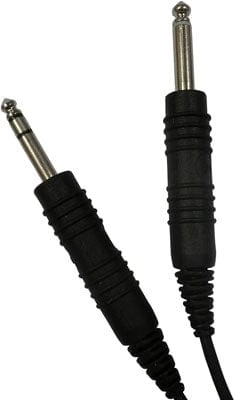 Quick reality check. Aviation headsets don't plug into your home hi-fi or your PC. Different world entirely.
The standard GA setup is twin-plug. And one of those is a weird size. One jack for the headphones, one for the microphone. Two separate connectors, not the single 3.5mm you're used to on your phone. Some helicopters use a different connector. Some more modern aircraft use yet another one.
The good news is Bose sell adaptors and replacement cables, so a single headset can usually be made to fit whatever you're flying. The less good news is that's another thing to think about before you spend a thousand pounds. If you might fly something different down the line, or if your school's fleet is mixed, check the connector situation first.
Living With Them: The Long-Term View
This is the bit that matters. Reviews on day one are easy. Reviews after years of actual use are the ones worth reading.
Noise reduction. The C172 isn't a quiet aeroplane. The A20s make it civilised. After a two-hour flight you don't step out feeling battered, ears ringing, exhausted before you've even got the cover back on. Big deal. Underrated benefit.
They still work when the batteries die. Quietly brilliant, this one. Passive performance is good enough that I've forgotten to switch them on more than once and not really noticed. Not until I do switch them on mid-flight, anyway. Then it's a world of difference. The active noise reduction earns its keep the moment you turn it on.
Comfort on long flights. No clamping pressure issues. Forgettable on the head, which is the highest compliment any headset can get. Your head shouldn't notice your headset.
The case. Useful beyond the headset itself. Pens, spare AA batteries, the bits and bobs you always need and never have. Genuinely part of how I pack for a flight now.
Bluetooth. Pairs to the iPad running SkyDemon. Honestly? I don't always bother setting it up. Nice to have rather than essential. Worth knowing it's there when you want it. But I'm not selling it as a killer feature. Not all A20s have the bluetooth option either.
What I'd Change
The price. Obviously. £1000 is still £1000 in any currency.
And the foam microphone cover. I managed to eat mine once, somehow. Don't ask. Then I lost the replacement. They're cheap to replace but easy to lose, and the headset feels naked without one. Order spares.
Beyond that? Genuinely nothing. No clamping issues. No comfort niggles. No reliability problems. Even on the price, everything in flying is expensive. Picking on the headset feels unfair when the aeroplane next to it costs more per hour to run than my mortgage.
I'm not planning to sell, so resale value is irrelevant to me. It's strong if you ever do, though.
A Word on Scams (Because This Headset Is a Magnet for Them)
Quick note on prices first, because it helps you spot the scams.
As of writing, there are usually a handful of A20s on eBay sitting somewhere between £500 and £600. That's the realistic second-hand market. Anything wildly under that, especially on Facebook from a profile you don't know, is almost certainly a scam.
Heads up if you're shopping second-hand.
The A20 is so common in GA that it's become a prime target for Facebook Marketplace and group scams. Same pattern every time. A too-good-to-be-true price, or a reasonable price - the scammers are not stupid. A couple of photos, normally stolen from another advert. A seller who's dad is giving up flying, r the have two many and are selling a spare.. But the end result is they want the cash and then they vanishs.
Red flags to watch for:
- Profile created hours or days ago
- No aviation content, no flying photos, no posts in real GA groups
- Pushy on payment method, especially transfers with no protection - Cash Apps are a favourate.
- Won't do a video call to show the headset
- Photos lifted from elsewhere
The scammers are getting smarter, by the way. Profiles look more lived-in than they used to. A few aviation-adjacent posts thrown in to look legitimate. Stay sceptical even when it looks fine on the surface.
If you're buying second-hand, buy from someone with a real flying footprint. Posts from a known club. A recognisable airfield in the background. Friends in the comments who actually fly. Better yet, a name someone in your circle can vouch for. The A20 second-hand market is genuinely good. You just have to filter the noise.
The Alternatives Worth Knowing About
The headset conversation in any flying club always lands on the same three names. Bose, Lightspeed, David Clark. Here's where I sit on the other two.
Lightspeed Zulu 3
The other big one. Half your flying club will be in Bose, the other half in Lightspeed. There's no clean winner.
I haven't owned a pair, so I won't pretend to review them. What I'll say is they're worth trying side by side if you can. Some pilots swear by the Lightspeed sound profile and find Bose too polished. Others go the other way. They are a little cheaper, similar features, comparable noise reduction. It's preference more than performance.
David Clarks (the old-school option)
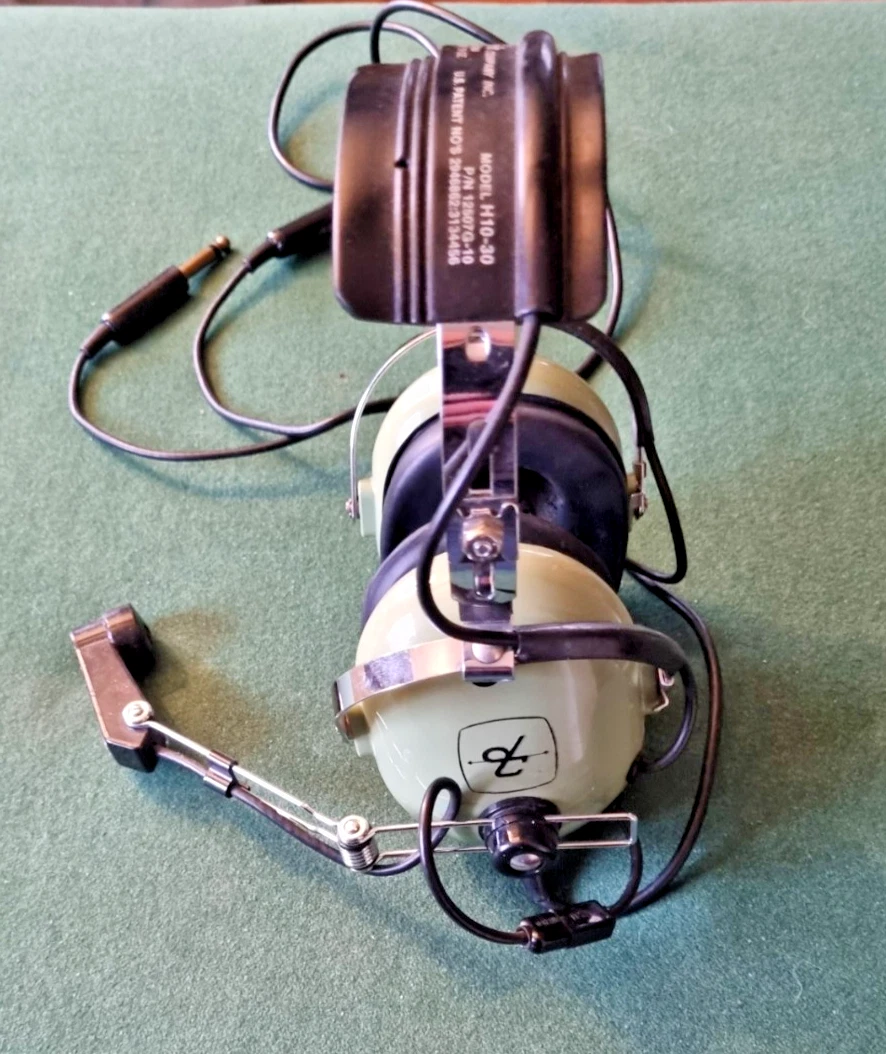 The green ones. The ones your instructor's instructor probably learned in.
The old schoolers swear by them. The one time I tried a pair, I was swearing at them. Born in the 1970s, iconic in Vietnam War films, and that's where I think they should stay.
Heavy. Tight on the head. Passive noise reduction only on the standard models. Built like a tank, which is part of the appeal if you're that way inclined. I'm not. Move on.
Cheaper noise-cancelling options
They exist. Caz has a pair of cheap SEHTs with noise cancelling, plus the famous Pooleys pink ones with no noise cancelling. The cheap ones do a job. They're fine for the occasional passenger flight. They're not in the same conversation as the A20s for serious use, but for a spare or a passenger headset, they earn their place.
I'm actually tempted to pick up a Lightspeed Zulu as a spare for Caz to try.
The colour problem
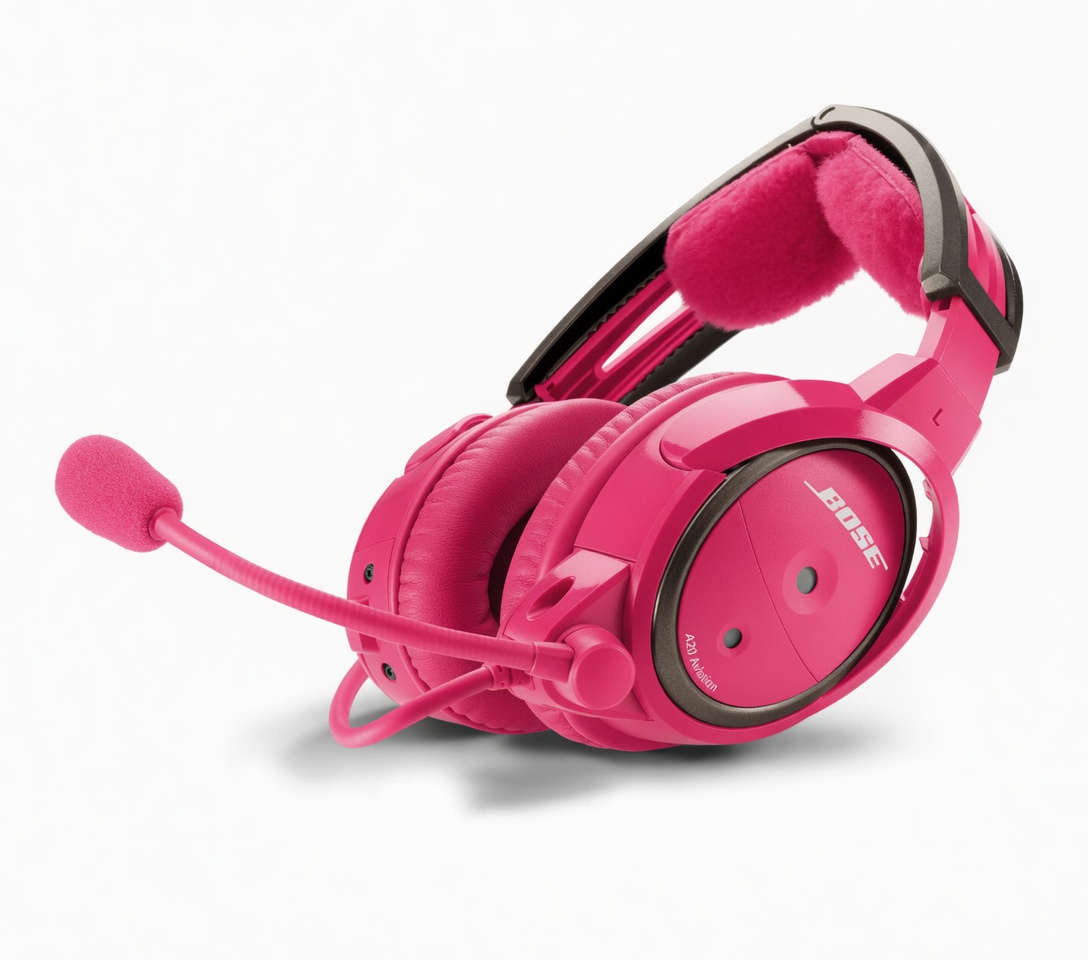
I asked Caz if she'd want a pair of A20s. She said yes. If they came in pink.
They don't. Bose does black, and that's it.
A real gap in the market when half your potential customers already own pink Pooleys for a reason. Bose, if you're reading this. Pink A20s. We'll talk.
The A30 Question
Bose has moved on. The A30 is the current model, sitting at around £1,200 as of 2026.
Have I upgraded? No. Do I plan to? Also no.
The A20s still do the job they were bought to do. They're comfortable. They're quiet. They're reliable. Until they actually break, I see no reason to spend another twelve hundred quid.
Unless Bose fancies sending me a pair of A30s to compare, of course. They won't. But it'd be rude not to ask.
So, Is £1,000 Worth It?
For me, yes. With caveats.
It's worth it if you're committed to flying for the long haul, not just trying it out for a couple of lessons. It's worth it if comfort and one less cockpit worry matters to you in those overwhelming early hours. It's worth it if you can afford it without it hurting, because flying will hurt your wallet plenty in other ways.
It's not worth it if you're still deciding whether flying is for you. School headsets exist for a reason. Use them. See if you stick with it. Then spend the money once you know.
The Score? 4/5
The honest verdict? 4/5 I bought them as a nervous student. I'm still flying with them years later. They've outlasted my early panic, several different instructors, and one chewed-off mic foam. Why not 5/5 if they are so good? One word price. If they were cheaper it would be 5/5, but £1000 is still expensive.
Over to You
So tell me. Did you splash out early or hold off? Are you Bose, Lightspeed, or stubbornly David Clark? And has anyone, anywhere, ever managed to keep a foam mic cover for more than six months?
Thats it for now. If you're new round here, the rest of the kit reviews are at https://whiskeyalphapilot.com/kit-reviews. There's a YouTube channel too, where I'm slowly working out how to fly properly while filming myself doing it.
Pink A30s, Bose. You know where to find me.
Because here's the thing. A grand for a headset isn't expensive. It's an investment in comfort. And in a cockpit, comfort is what lets you focus on the bit that actually matters: flying the aeroplane.


